Work

Official CaretCMS demo theme · Astro + Cloudflare

Sterling District

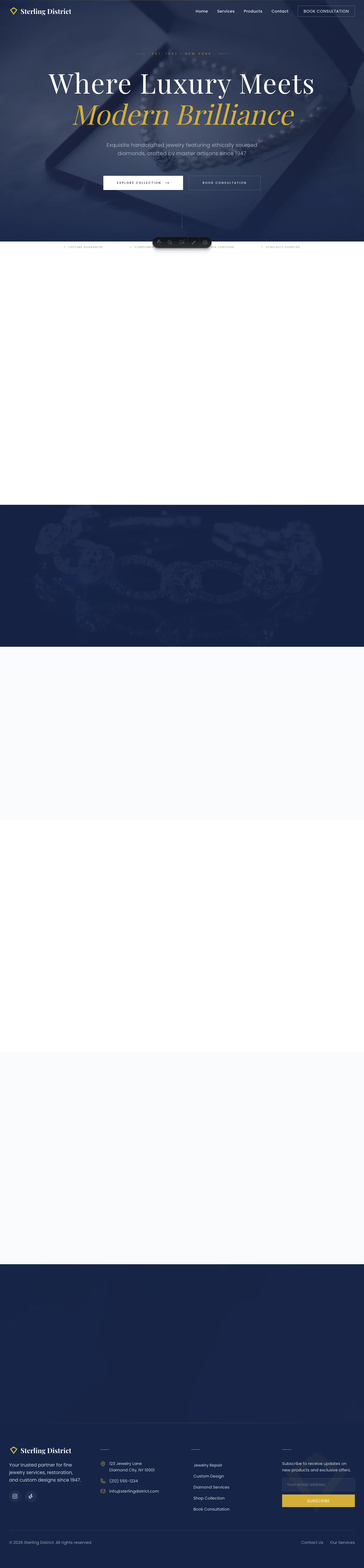
A complete storefront built to prove that CaretCMS works across real pages, shared content, product data, and media—not only isolated examples.

CaretCMSAstro 7Cloudflare Workers
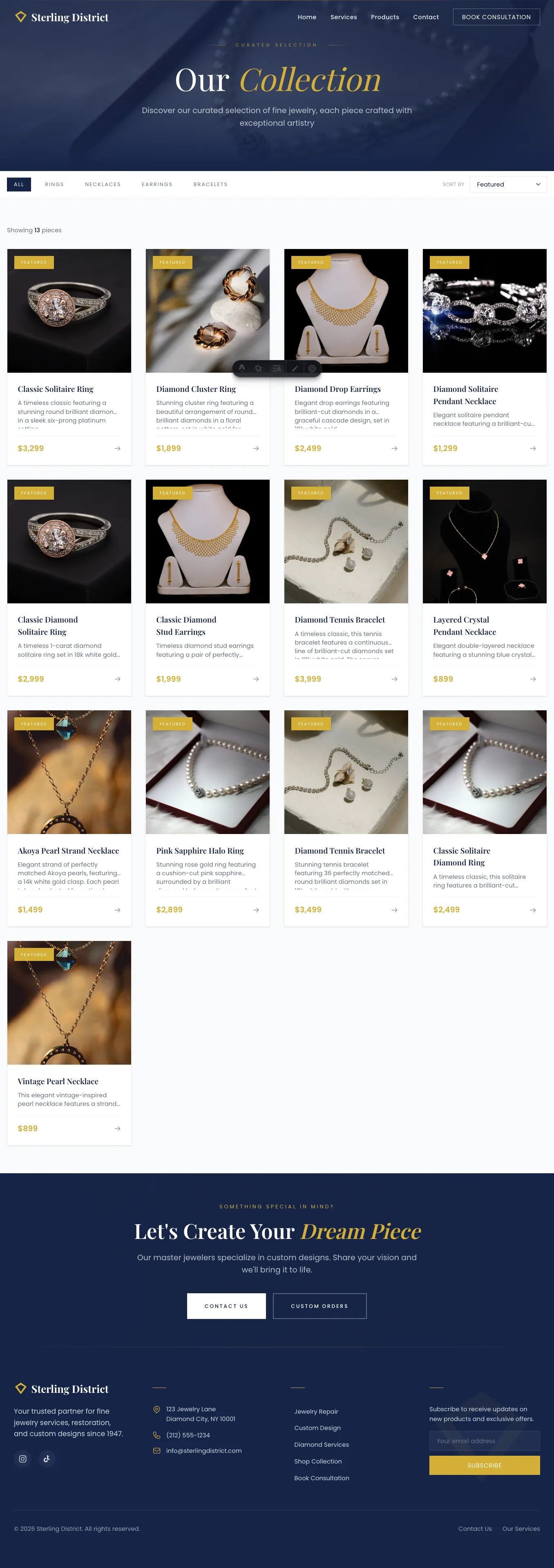
5 collections Products, testimonials, FAQs, site settings, and pages
30 seeded entries Seeded content across the whole demo
Cloudflare-ready KV, R2, Wrangler, and Worker preview wired in

Build overview

Problem

Small examples can prove that an editor opens or a field saves, but they do not reveal what happens when one CMS has to manage full pages, repeated products, shared settings, testimonials, FAQs, and uploaded media together. CaretCMS needed a populated project that could expose those integration problems before developers met them in client work.

Implementation

I built a complete jewelry storefront around five editable collections and 30 seeded entries. Page content can be changed visually, structured content is managed in Studio, and the same validation rules keep the editor and application aligned. Content storage, media uploads, local development, and deployment are already connected so developers can test the whole workflow instead of assembling the demo themselves.

Result

The result is both a product demo and a reference project. Developers can clone a site that already has meaningful content, edit it through two different workflows, and follow the data from the editor to the rendered storefront. Keeping the demo complete adds more code than a minimal starter, so the project uses clear collections, seed content, and documentation to keep the architecture understandable.
Implementation choices

Alternative Engineering decision Why it matters
  • AlternativeUse a minimal example that demonstrates individual features but leaves the integration work to the evaluator.
    Engineering decisionShipped a complete storefront with visual editing, structured content management, authentication, storage, and deployment already connected.
    Why it mattersDevelopers can judge the CMS by using a realistic workflow rather than inferring one from snippets.
  • AlternativeDefine validation for the application and configure the editing interface separately.
    Engineering decisionUsed the same Zod schemas to validate application data and describe Studio fields.
    Why it mattersProducts, FAQs, testimonials, pages, and settings stay aligned as their content models change.
  • AlternativeDemonstrate editing locally but leave storage and media behavior out of the example.
    Engineering decisionConnected durable content storage, media uploads, and deployment configuration as part of the demo.
    Why it mattersThe path from local evaluation to a deployed project is visible and testable, not an undocumented second build.
  • AlternativeStart with empty collections that make setup quick but hide how the interface behaves with real content.
    Engineering decisionSeeded 30 entries across products, pages, testimonials, FAQs, and global settings.
    Why it mattersFiltering, repeated content, shared values, and editing flows can be evaluated immediately.

Implementation

Prebuilt CaretCMS integration

Visual editing, Studio, authentication, content storage, media uploads, and Sterling District branding are configured as one working system.

Structured Studio collections

Products, FAQs, testimonials, and global site settings are editable through `/admin/cms` using schemas generated from Zod.

Inline page editing

Storefront pages and reusable components include `data-caret` bindings so the visual editor can update rendered content directly.

Seeded content architecture

Seed JSON powers Astro content collections for pages, products, FAQs, testimonials, and site globals so the demo behaves like a populated project on first run.

Cloudflare deployment path

Content storage, uploads, secrets, local preview, and production deployment are documented and wired together rather than left as follow-up exercises.